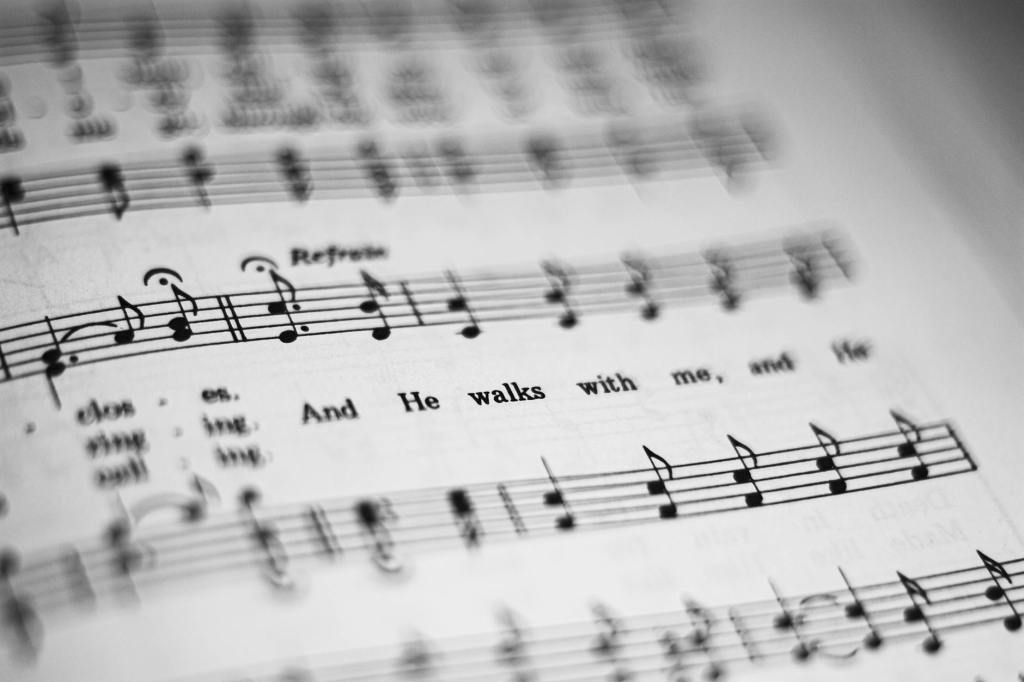
Today we will be looking at more types of music notes and what they mean. If you still aren’t familiar with the basic music notes, you will want to go back and review my second and third ever posts (Music Notes and Music Rests). You will also learn a system of counting rhythms today if you don’t already know. It is not hard, but it does take practice. I will most likely go back and add this to the music notes post and possibly to the music rests post. Just remember that rests are silent and are not to be played. Down below is a picture of how to count the basic rhythms. We will touch more on that subject in an upcoming post.
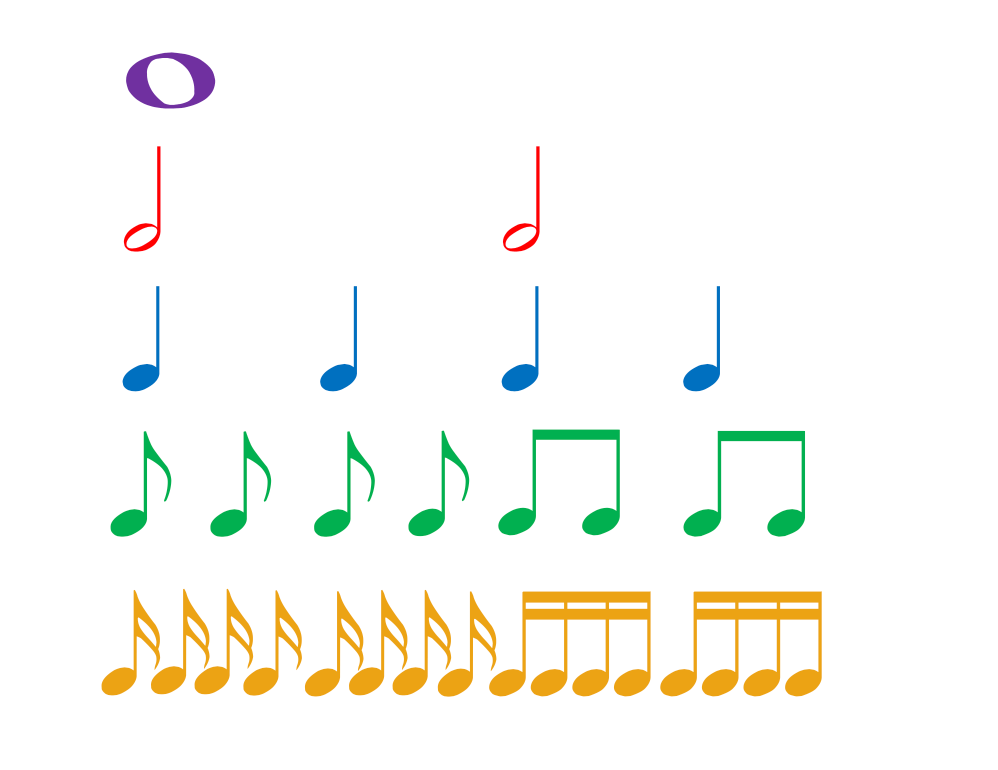
Now let’s take a look at some new notes and how to count them!

The above rhythm is one of the easiest you will learn today, and it equals one whole beat. These are sixteenth notes, meaning that each note above gets half an eighth note, or a quarter of a quarter note. We count the above in any time signature with four as the bottom number: 1-e-&-a. These syllables are able to fit within one beat if counted correctly, but the notes are simply just subdivided into four equal parts.
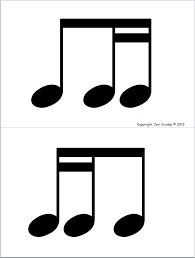
These two note examples can each be counted within one beat. It is half a beat with two quarter beats. The only difference is where the sixteenth notes are located on the beams. There is a note with two sixteenths on either side of an eighth note, but that is a complicated matter for another time. The above notes (starting with the top ones) can be counted as 1-&-a. The “one” gets held twice as long as either of the sixteenth notes. The bottom notes are 1-e-&. The “&” gets held twice as long as either of the sixteenth notes this time, instead of beat one.

These notes, as you observe, are eighth notes with a 3 over them. These are triplets, and are not hard to count. It is easier to look up a YouTube video on how to count these, but I will explain these as easily as I can. A triplet is like counting in 3/4 time (just counting to three) but slightly faster and syncopated. Syncopated means that it is barely but still noticeably off beat from the usual 1-2-3-4 or 1-2-3, (etc.) rhythm. In any time signature that has an eight for the bottom number, the triplets get different counts.
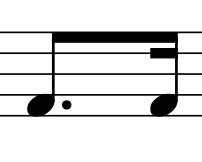
For the picture above, this rhythm is most common in anything with the bottom number four in a time signature. It can be used in anything with a bottom number of eight, too, but that is another matter for another post. The first picture has a dotted eighth note beamed to a singular sixteenth note. In this example, we would count this 1-e-&-a in our heads, but since the dotted eighth note is three sixteenth notes (I will elaborate on dotted notes and rests in a later post), we would count 1 out loud, say e-& in our heads, and say “uh” out loud. Thus, it would sound like: 1-da. The “one” would be held the longest.
Lastly, let’s think about two dotted eighth notes beamed together. (Sorry that I don’t have a photo for this 😬) This rhythm is most frequently used in 6/8 time, but can be used in any time signature with the bottom number 4 or 8. This rhythm is extremely syncopated. For 6/8 time (if the whole measure was filled with the dotted eighth notes beamed together) you would count “one” out loud, think &-2 in your head, then count the “&” of two out loud. After that you would think 3-&. Then you would do the same for the rest of the measure.
I hope that you learned something new, or expanded on your current knowledge. If you need help or are still confused on what I’m talking about, don’t hesitate to put your thoughts in the comments. Also, if you are confused but don’t want to write me, feel free to check out some YouTube videos on how to count these rhythms. See y’all in the next post!
Post photo 1 by Band Directors Talk Shop
Post photo 2 by The New Drummer
Post photo 3 by Clipart Library
Post photo 4 by Learn Flute Online
Post photo 5 by Piano Theory Exercises
Cover photo by Nothing Ahead
 The Happy Musician
Leave a comment