
Now that we’ve talked about music notes, it’s time to talk about music rests. In this post, I will cover what exactly a rest is, what you should do during a rest, and how some rests have the same durations as music notes. Let’s get to it!
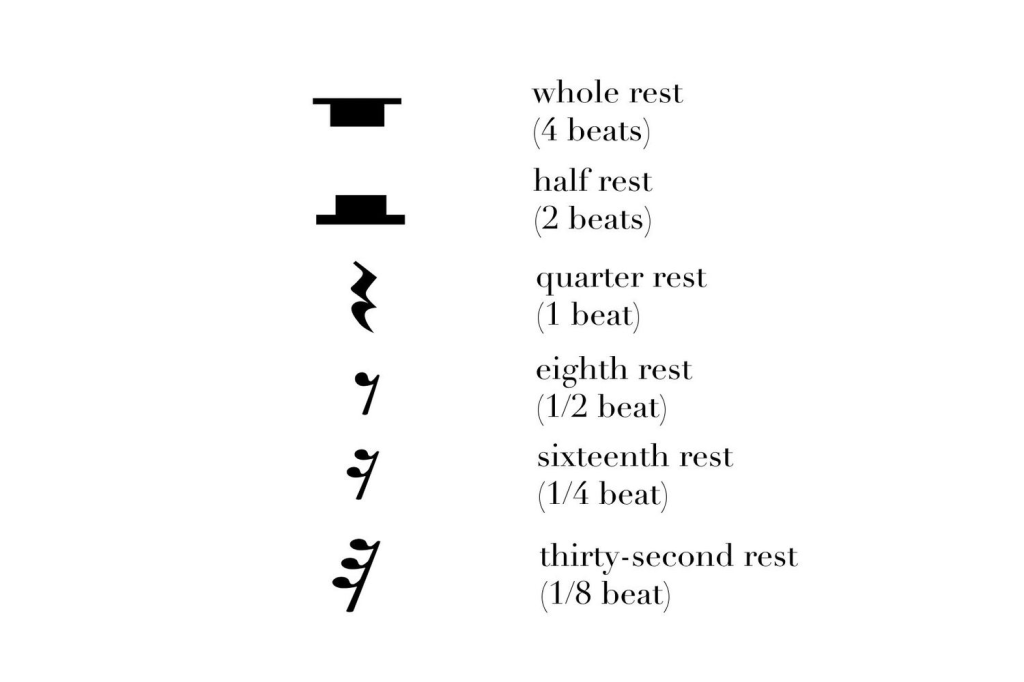
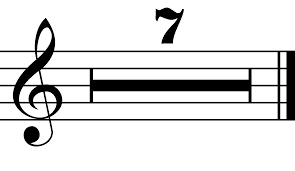
A rest in music is just as you would think: silence. And you would be right, except for the fact that in your head you would still be counting, just as you would do with notes. When resting, you must count so you know where to come back in. Counting is especially handy when you have multiple sections, or measures, of rest, as seen above. Measures divide notes and rests into groups depending on the time signature. This will make more sense after my upcoming post. Now, let’s explore the different rests and how they are similar to music notes.
Whole rest: The whole rest gets four beats, much like the whole note gets four beats. If you count to four, that’s how long a whole rest will last.
Half rest: Half of a whole rest, it gets two beats. In 4/4, you can use two half notes in the same measure.
Quarter rest: A quarter of a whole note, it gets one beat.
Eighth note: An eighth note is half of a quarter note, and therefore gets half a beat.
Sixteenth note: A sixteenth note is half of an eighth note, and gets a quarter of a beat.
I hope you found this helpful! Check back later today or sometime tomorrow for new posts! See you in the next post!
Post photo 1 by LiveAbout
Post photo 2 by Wikimedia Commons
Cover photo by Silviu Cozma

 The Happy Musician
Leave a comment